
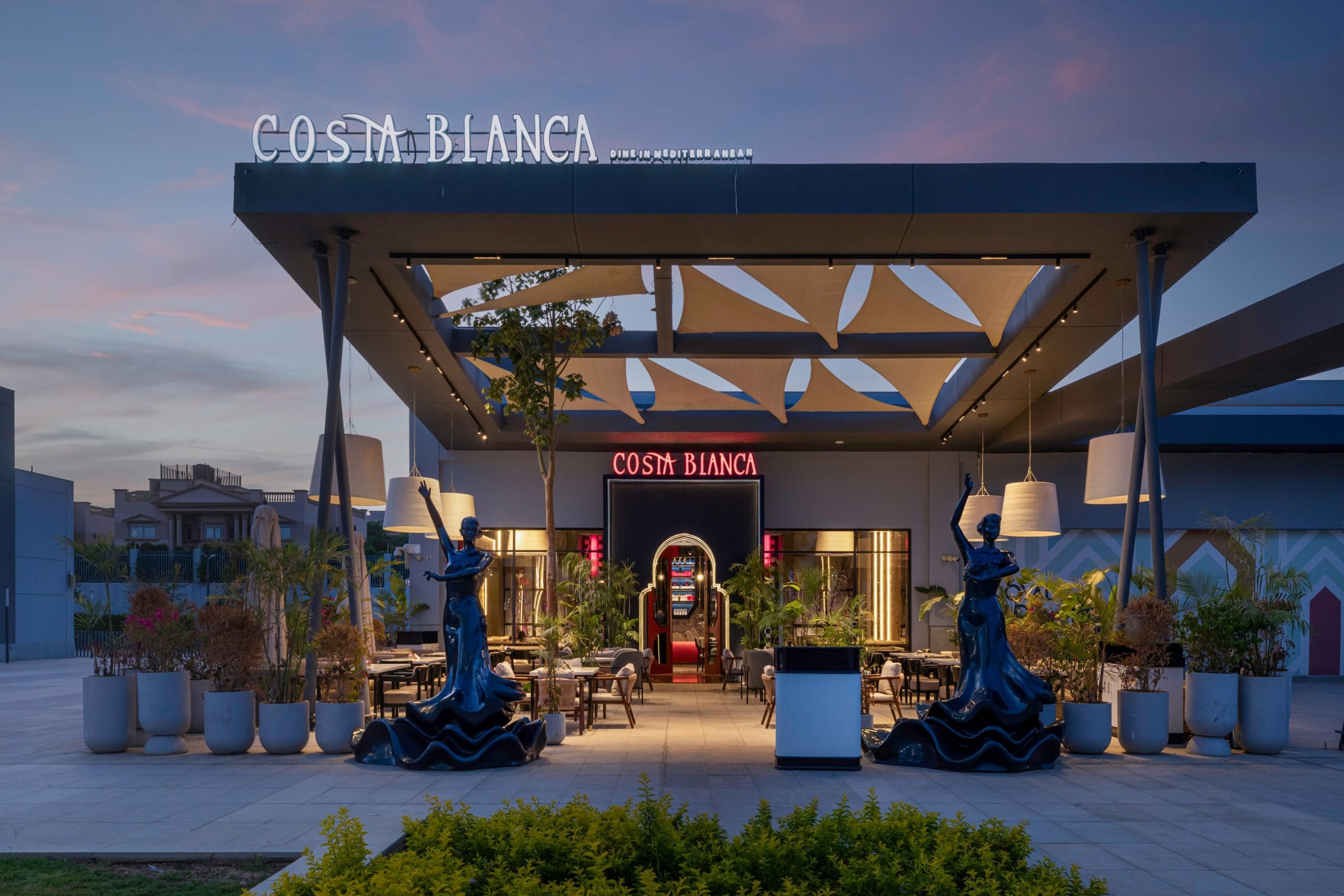
The restaurant industry has changed dramatically in the last few years. Customers are not just eating — they want to feel something. Today, interior design is one of the strongest competitive advantages an F&B brand can have.
At AES, we design spaces where people don’t just dine — they stay, photograph, and return.
Here is the full 2025 guide to restaurant interior design based on real consumer behavior, hospitality psychology, and our experience designing F&B spaces.
1. Why Design Matters More Than Ever in F&B
Restaurants with strong interior design:
✔ attract more walk-ins
✔ increase time spent
✔ improve photography → free marketing
✔ increase average spend
✔ create brand memory
✔ boost online ratings
Design is no longer decoration — it’s strategy.
2. The 2025 F&B Interior Design Trends That Will Dominate
1- Soft Futurism
Sleek lines, warm lighting, muted tones, and sculptural forms.
2- Modern Oriental
AES’s signature blend of minimal modern shapes with warm cultural textures and mood lighting.
3- High-Contrast Materials
Textured plaster + brushed metal Matte stone + glossy accents Warm wood + dramatic lighting
4- Sensory Design
Designing for sound, light, scent, and touch, not just visuals.
5- Instagram-Ready Corners
Not forced “photo spots”, but architectural moments.
3. Lighting: The Most Powerful Tool in Restaurant Design
Lighting alone determines:
✔ appetite levels
✔ how long people stay
✔ whether food photographs well
✔ whether a space feels expensive
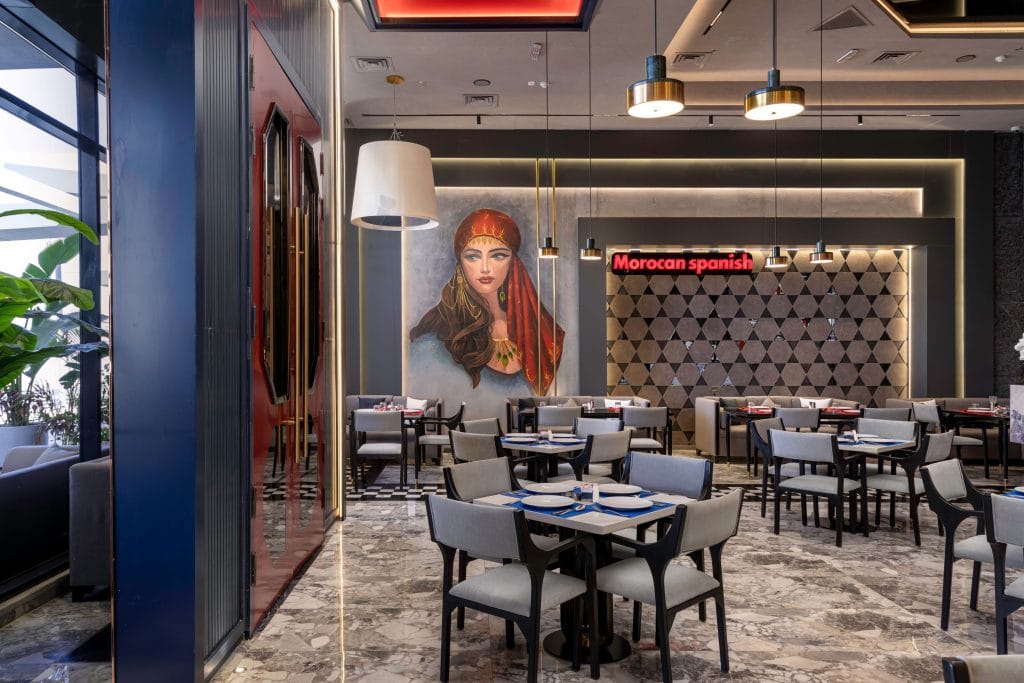
AES uses layered lighting:
- Ambient (warm emotional base)
- Accent (spotlights, mood)
- Architectural (coves, indirect glow)
Lighting is 70% of the experience.
4. Space Planning: The Secret Revenue Generator
Most F&B owners underestimate layout.
Good layout increases capacity, flow, comfort, and revenue.
AES optimizes:
✔ customer circulation
✔ waiting queues
✔ staff routes
✔ table zones
✔ acoustics
✔ storage visibility
✔ kitchen-service distance
A beautiful design will fail if circulation is poor.
5. Material Choices That Drive Customer Perception
Materials communicate quality faster than any branding. Luxury =
- stone
- marble
- wood veneer
- deep textures
- warm metals
- premium upholstery
Cheap materials instantly lower perceived value.
6. Branding Integration: Where Most Restaurants Fail
Branding is not a logo on the menu. It must be in:
- wall textures
- lighting rhythm
- type of furniture
- color psychology
- the scent
- the sound environment
- the entrance moment
AES designs brand experiences — not visuals.
Conclusion
If you want a modern restaurant that succeeds in 2025, design is your foundation. AES creates F&B spaces with a clear strategy, psychology, and identity.
Ready to build your concept?
Book a consultation with AES today.